


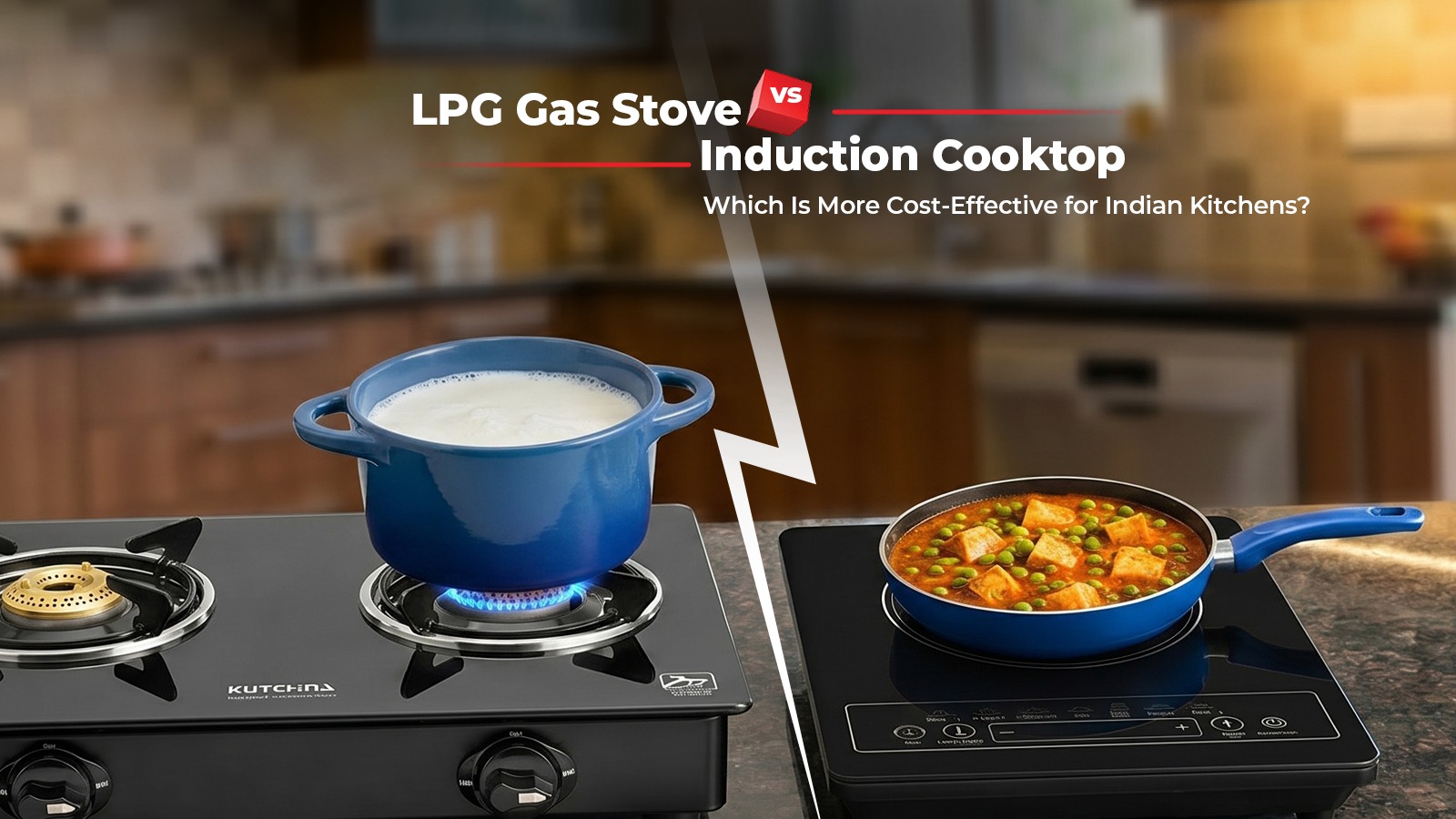
Gas cylinders running out mid-recipe. Electricity-bill spikes. Inverter brownouts that shut down a half-cooked sabzi. Every Indian kitchen has had at least one of these crises — and every one of them is exactly why a best induction cooktop pick has become non-negotiable for modern homes.
Induction cooktops are faster than gas, safer than open-flame, more energy-efficient than electric coil, and small enough to live happily on a corner of any kitchen counter. The question isn’t whether to buy induction cooker models — it’s which one to buy, and what to check before you do.
Here’s a practical guide.
Why Indian kitchens are switching to induction
Three things changed in the last few years. LPG cylinder prices climbed sharply. Power supply in metros and Tier-2 cities became reliable enough to depend on. And induction cooktops themselves got faster, cheaper and far better-designed.
Today, an induction cooktop heats water nearly twice as fast as a gas burner, transfers 85–90% of energy directly to the cookware (versus around 40% for gas), and cools down within seconds of switching off.
Spilled milk doesn't burn onto the surface. Children don't risk an open flame. And there's no gas leak waiting to happen.
It's no surprise the best induction cooktop is now a top-five purchase for new Indian households.
What to check before you buy an induction cooktop
Five things separate a good cooktop from a great one:
- Wattage — 1600W is the standard for daily Indian cooking. 1800–2000W cooks faster, ideal for pressure cookers and large families. Below 1500W is fine only for a single user or quick reheats.
- Pre-set Indian menus — look for at least 6–8 pre-sets: idli, dosa, curry, deep-fry, pressure cook, milk-boil, simmer, sauté. These remove the guesswork.
- Auto-pan detection and auto shut-off — the cooktop should turn off when no pan is placed or when the pan is removed. Critical safety feature.
- Crystal glass top with overheat protection — scratch-resistant, easy-clean, and rated for high temperatures.
- Voltage range support — Indian power supply fluctuates. Look for cooktops rated 170V–270V so they don't trip during voltage dips.
Bonus features worth paying a little more for: digital touch panel, timer (so you can walk away from a simmering dal), child lock, and a sleek front-display readout.
Induction cooktop vs gas vs electric coil — a quick comparison
If you're still on the fence, here's the short version:
- Speed — induction wins. Boils 1L of water in 3–4 minutes; gas takes 6–8.
- Energy efficiency — induction transfers 85–90% energy to the pan. Gas is 40%. Coil is 70%.
- Safety — no open flame, no gas leak, surface cools fast.
- Cookware needed — induction needs flat-bottom, magnetic cookware (steel, cast iron). Non-magnetic aluminium and copper won't work.
- Running cost — comparable to LPG at current prices, sometimes cheaper depending on tariff slab.
The one limitation: induction needs reliable power. If your area sees frequent outages without inverter backup, keep your gas stove as Plan B.
The best induction cooktop choices in 2026
If you're shopping in India today, you'll find induction cooktops in three broad bands:
- ₹1,500–2,500 — entry level. Basic features, 4–6 pre-sets, manual controls. Fine for occasional use or single-user kitchens.
- ₹2,500–4,500 — sweet spot. 1800–2000W, digital touch panel, 7–8 Indian pre-sets, auto pan detection, child lock. This is where most Indian families end up — and where Kutchina's induction range plays.
- ₹4,500+ — premium. Dual-burner, IR sensor cookware detection, advanced timers, premium glass top.
Among Indian-market brands, Kutchina's induction cooktops have earned strong customer ratings on Amazon and Flipkart for the ₹2,500–4,500 segment — a combination of Indian-cooking pre-sets, reliable build quality, wide voltage support, and the brand's pan-India service network.
Other notable picks in this segment include Prestige, Philips, Bajaj, and Pigeon.
Where to buy induction cooker models without getting burned
When you buy induction cooker models online, the cheapest option isn't always the smartest. Three things to confirm before you check out:
- Authentic seller — buy from the brand's official website or its verified store on Amazon/Flipkart. Counterfeit induction cooktops have become a real problem on marketplace listings.
- Warranty terms — minimum 1-year manufacturer warranty. Premium models come with 2 years.
- Service network — induction cooktops occasionally need a coil or PCB replacement. Brands with no service centre in your city will leave you stranded.
Kutchina, for example, sells its induction cooktops directly through its official small appliance range, and through Amazon and Flipkart official stores — with a service network that has earned the brand its reputation as The Kitchen Experts across India.